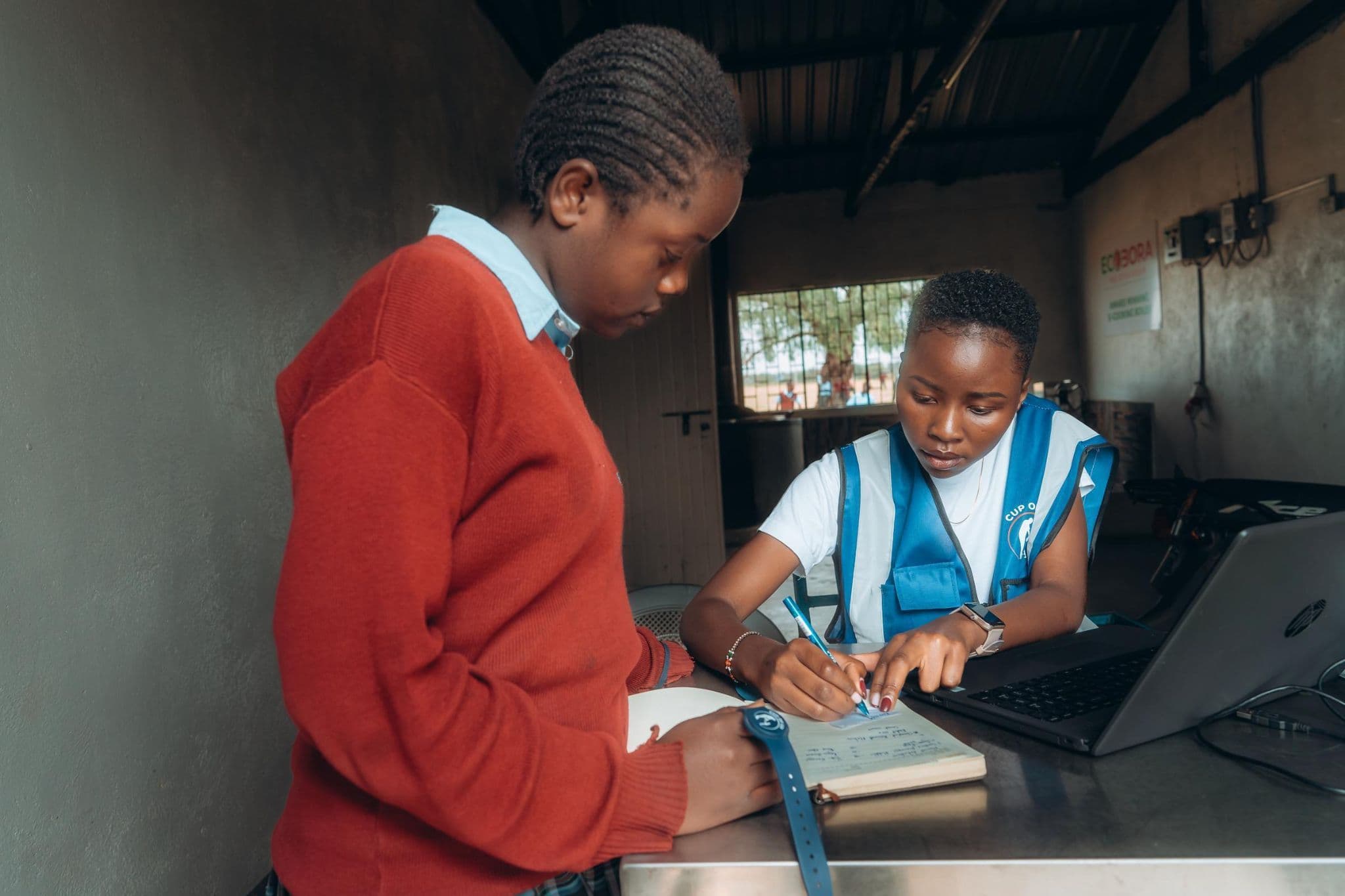
Photo credit: Rockefeller Foundation
Helping cities deliver more for their residents
A $50 million initiative with The Rockefeller Foundation to fund organizations helping cities improve essential public services with AI.
Many services people rely on every day are provided at the city level. Local governments help people access healthcare and benefits, prepare for extreme weather, find economic opportunities, and participate in decisions that shape their communities.
City governments are being asked to do more with limited resources. AI solutions can help public agencies anticipate problems earlier, make information easier to access, and give public servants better tools to do their jobs. Turning that potential into better services takes organizations with local expertise, technical knowledge, and resources to work alongside city governments to test what works and expand successful approaches responsibly.
Today, the OpenAI Foundation and The Rockefeller Foundation are launching Cities Deliver: AI Solutions for Public Services, a $50 million initiative to support organizations working alongside city governments using AI to address problems facing their residents.
Through a global open call, Cities Deliver will award grants ranging from $500,000 to $2 million over 24 months. The initiative’s goal is to fund organizations that collectively reach up to 100 million city residents worldwide.
Starting with the problems cities want to solve
Cities Deliver is looking for projects that are grounded in local priorities and take advantage of the latest capabilities of frontier AI tools to improve public service delivery.
The open call will focus on four areas:
Public health: Extending the reach and readiness of public health systems, including frontline care, disease surveillance, disability services, food access, and nutrition.
Economic mobility: Connecting unemployed and underemployed residents to income, skills, and benefits, including through benefits enrollment, career navigation, skills-based hiring, and employer-aligned training.
Environmental resilience: Helping cities anticipate, withstand, and recover from environmental shocks, including through public safety, emergency services, energy infrastructure, and land management.
Civic engagement: Solutions that help city governments reach residents proactively and respond faster, from two-way service channels to participatory decision-making. Includes digital access and connectivity, court services, and permitting and regulatory processes. Excludes projects related to voting or elections.
Cities Deliver welcomes projects that combine frontier AI with the practical tools and systems cities already use. Applicants may choose the AI models and products that best meet their needs, with no requirement or preference to use OpenAI technology. Cities Deliver is looking for teams with deep knowledge of the communities they aim to serve, the ability to deploy technology in government settings, and clear plans for evaluation, privacy, security, and long-term sustainability.
Cities Deliver will support projects at two stages. Seed grants of $500,000 to less than $1 million will help organizations refine an idea with city partners, build and test a prototype with real users, and pilot the solution in a city setting. Scale grants of $1 million to $2 million will support solutions that have already been piloted in a city and demonstrated early results, helping them reach more residents or expand to additional cities.
Every project must be led by an eligible organization and serve a charitable purpose. Eligible applicants include nonprofits, public benefit corporations, and select for-profit organizations. Each project must deliver on the work with a city government partner committed to the outcomes and impact for the community. City governments cannot apply directly. See the initiative website for full eligibility criteria.
Building on what cities are already learning
This work stems from the efforts The Rockefeller Foundation and OpenAI began in 2023, when they brought together more than 40 civic leaders from six continents to explore how AI could improve city services.
Those conversations led to early projects in Cali, Colombia; Cape Town, South Africa; and Rio de Janeiro, Brazil. In Cali, Dengue.AI forecasts outbreaks to help public health officials target prevention efforts. In Cape Town, an AI-powered messaging platform helps residents engage with local government. In Rio, a WhatsApp chatbot connects flood alerts and residents’ reports with the city’s emergency response systems.
Cities Deliver builds on these early projects to identify promising approaches, test them with residents and public servants, and learn how to integrate successful solutions into the services and systems cities already use.
Extending the benefits of AI
The OpenAI Foundation’s mission is to ensure that artificial general intelligence benefits all of humanity. Our Civil Society & Philanthropy program puts that mission into practice by helping communities benefit from AI now and at scale.
Cities Deliver builds on our efforts to ensure lifesaving medical advances reach everyone, bring AI-powered weather and crop disease forecasts to smallholder farmers, and ensure useful AI tools work in as many languages as possible. It also builds on the work of the People-First AI Fund, which helps nonprofits explore how AI can help local communities. With Cities Deliver, we are extending that work to the essential public services residents rely on every day. Across these efforts, we pair advances in AI with the expertise of organizations closest to the problems, turning new capabilities into practical benefits for people.
Applications for Cities Deliver are now open. Proposals (including a short video) are due by November 29, 2026. Apply here.